
Huntingtower – Armadale the establishment of the school
1n 1926, the first talks about a school for the children of Christian Scientists were being held. An informal group was formed to consider the questions of possible enrolments, staffing and finance.
Joy Coleman, formerly Joy Solomon and a Foundation student wrote:
“In the late December to early January, my Mother, the late Mrs E (?) Solomon, having lost her husband (my father) on 21 December, knew she had to fill her life with new ideas, & work, to support herself, & her 3 children. We were all at schools, & thinking of schools & their fees each term, gave birth to “the idea.”
A school for Christian Science children to be run on similar ideas & ideals as Principia in U.S.A., according to the printed news, which we received regularly from the College.
This idea was given to the late Florence Hollick, my family’s practitioner. She too had the same experience on the same date, of losing a loved partner, her husband.
Mother also discussed the idea with a loving friend, Mrs Scholer. Eventually the idea was presented to Misses Goldstein & Mrs Champion, pillars of First Church, Melbourne.
From there the whole thing took shape, & the school Huntingtower, of Huntingtower Rd., Malvern was born.”
Mr J. O. Thomson, part of that small committee, approached Mr David Boyd Coutts in the Spring of 1926 with the invitation to investigate the establishment of the proposed school and the assumption of the role of Headmaster.
D.B. Coutts had been employed at Malvern Grammar School and his progressive thoughts on education were not wholeheartedly taken up by the current Headmaster, so when he saw a great opportunity to practice some of his modern ideas, he took it.
”I was glad to respond to the invitation of a group of Church members to set about organizing such a school. (Like Principia it was to have no official connection with the Church). I looked forward building a school from the ground up, with no established traditions that might have become outworn and with no incubus in the past. … Among the points that I had in mind for inclusion in the school plan (besides those already mentioned), were ways of getting an element of creativity into what went on in the class-room and out of it.”
Coutts’ educational influences came from a variety of sources.
Bedales – a school in Hampshire, England - was set up by the Quakers, and had many innovations that Coutts was inspired by; the school philosophy of co-educational boarding, pastoral care, student self-government and a sense of partnership in student/teacher relations. The Dalton method of teaching had no formal instruction – everything depended on “the industry and curiosity” of the pupils. John Dewey in the United States, and Montessori in Europe also influenced his modernist educational approach.
In 1926, when D.B. Coutts agreed to set up a school for the children of Christian Scientists, He and his wife started looking for a suitable property. He later wrote:
“We began to look for a large house, necessarily old and still surrounded by spacious grounds. It was recognized that we would need to have a boarding school so that pupils might be drawn from a wide area. There were several such places in the district … and I think the deciding factors in our choice were the extent of the grounds and the number of rooms. For these reasons we ultimately settled on No. 4 Huntingtower Rd, Armadale. Here, on approx. 1½ acres we were able to have two tennis courts and a basket-ball field, cricket practice nets, and a grassed area as a general playground. With some alterations eighteen rooms were available for use. This was just the kind of thing we wanted; but specially built class-rooms were still required.”
He goes on to talk about the gardens.
“ … the garden, apart from the grassed area, contained many mature, exotic trees, all of great interest. They provided a setting of beauty to greet the new students. No trees had to be cut down to make room for the new class-rooms.”
“It was decided to retain the original name of the house (Huntingtower), the choice being reinforced by the discovery that there existed in Scotland an ancient castle called Huntingtower”
Joyce Lewis recalled:
“Mr J. O. Thomson, one of the earliest workers on the Establishment Committee pointed out that Huntingtower, the name of the property purchased in Armadale ‘was very suitable for a school that was concerned with HUNTING for the truth on the high TOWER of inspiration”
The house itself consisted of 16 rooms which had to accommodate the students, including boarders, staff and Mr and Mrs Coutts. It was set on 1½ acres of land with a spacious front lawn with large trees. The grass tennis court was at one side, and at the rear a hard surface tennis court.
The house was purchased outright in December 1926, using a generous loan from Mrs Coutts. There was much to be done if the school was to open in February 1927.
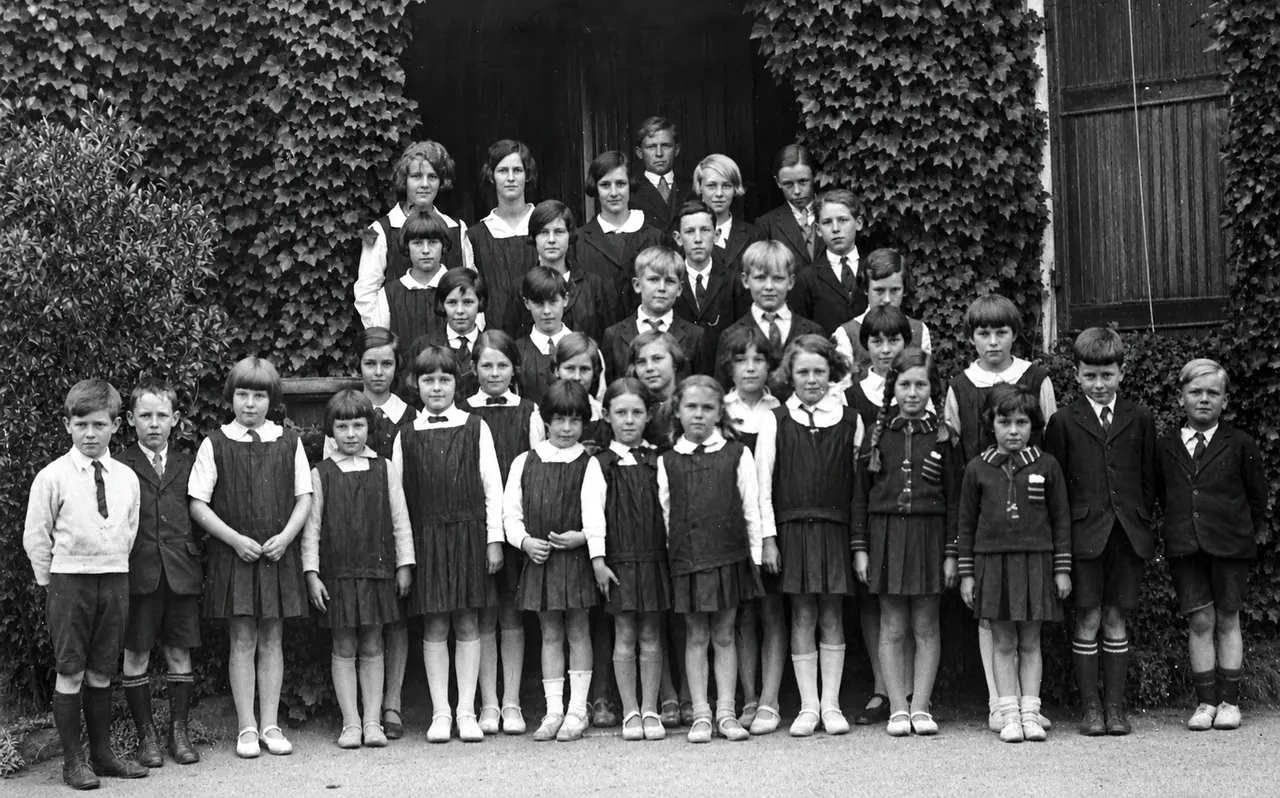
There are no accounts of how this was achieved – but open it did, on February 8th, 1927, with 36 students, twelve of whom were boarders!
Coutts states in his memoirs :
“My wife and I decided that we would prefer, at this stage, to take over the whole responsibility. We therefore purchased the property for £6,000.--.--. Our equity in the property was used to obtain a loan from the National Bank of £11,000.--.--. Tenders were immediately called for the erection of two classrooms plus the provision of separate toilet blocks for boys and girls.
The brick classrooms cost £4,000.--.--., the conversion of the garage and other changes an amount which I have forgotten and we had enough to pay staff salaries and general expenses. I recall that it was six or seven years before we managed to get out of the red completely. This was aided by the fact that neither my wife nor I, took and remuneration for our services other than keep and residence (estimated by the taxation department at £1.10.--.per week).”
Mr. and Mrs. Coutts were owners of the school for its first thirteen years. Mr. Coutts actively encouraged and supported the Parents’ Association. It had a prominent role. The President spoke at Speech Day and introduced the Head Master
It seems that Mr. & Mrs. Coutts had total responsibility for decisions on staffing, curriculum, policy and money matters. Mr. & Mrs. Coutts fulfilled the offices of Treasurer and Bursar, along with their other duties. It is possible Mrs. Coutts continued to giver her financial support to the school. Many Christian Scientists did, in abundance. The modest enrolment of the school made the financial support necessary. Help came from the Christian Science field as it was needed.
Cowen, Joy (nee Solomon) letter to Shirley Paine undated but before 1979,
Coutts, D. B. Unpublished chapters of his autobiography page 174.
Coutts, D.B. Ditto. pages 175, 188
Coutts, D.B. The Early History of Huntingtower. Unpublished, undated.
Coutts, D.B. Ditto.
Coutts, Yvonne. From Notes taken by Don Bain ‘ in her last days’.
Lewis, Joyce M. Huntingtower Foundation Headmaster. Unpublished notes, 31 March 1982
Coutts, D. B. The Early history of Huntingtower. Unpublished memoir 1975
vjhkuygfku y
Huntingtower – Armadale the establishment of the school
1n 1926, the first talks about a school for the children of Christian Scientists were being held. An informal group was formed to consider the questions of possible enrolments, staffing and finance. Joy Coleman, formerly Joy Solomon and a Foundation student wrote: “In the late December to early January, my Mother, the late Mrs E (?) Solomon, having lost her husband (my father) on 21 December, knew she had to fill her life with new ideas, & work, to support herself, & her 3 children. We were all at schools, & thinking of schools & their fees each term, gave birth to “the idea.” A school for Christian Science children to be run on similar ideas & ideals as Principia in U.S.A., according to the printed news, which we received regularly from the College. This idea was given to the late Florence Hollick, my family’s practitioner. She too had the same experience on the same date, of losing a loved partner, her husband. Mother also discussed the idea with a loving friend, Mrs Scholer. Eventually the idea was presented to Misses Goldstein & Mrs Champion, pillars of First Church, Melbourne. From there the whole thing took shape, & the school Huntingtower, of Huntingtower Rd., Malvern was born.” Mr J. O. Thomson, part of that small committee, approached Mr David Boyd Coutts in the Spring of 1926 with the invitation to investigate the establishment of the proposed school and the assumption of the role of Headmaster. D.B. Coutts had been employed at Malvern Grammar School and his progressive thoughts on education were not wholeheartedly taken up by the current Headmaster, so when he saw a great opportunity to practice some of his modern ideas, he took it. ”I was glad to respond to the invitation of a group of Church members to set about organizing such a school. (Like Principia it was to have no official connection with the Church). I looked forward building a school from the ground up, with no established traditions that might have become outworn and with no incubus in the past. … Among the points that I had in mind for inclusion in the school plan (besides those already mentioned), were ways of getting an element of creativity into what went on in the class-room and out of it.” Coutts’ educational influences came from a variety of sources. Bedales – a school in Hampshire, England - was set up by the Quakers, and had many innovations that Coutts was inspired by; the school philosophy of co-educational boarding, pastoral care, student self-government and a sense of partnership in student/teacher relations. The Dalton method of teaching had no formal instruction – everything depended on “the industry and curiosity” of the pupils. John Dewey in the United States, and Montessori in Europe also influenced his modernist educational approach. In 1926, when D.B. Coutts agreed to set up a school for the children of Christian Scientists, He and his wife started looking for a suitable property. He later wrote: “We began to look for a large house, necessarily old and still surrounded by spacious grounds. It was recognized that we would need to have a boarding school so that pupils might be drawn from a wide area. There were several such places in the district … and I think the deciding factors in our choice were the extent of the grounds and the number of rooms. For these reasons we ultimately settled on No. 4 Huntingtower Rd, Armadale. Here, on approx. 1½ acres we were able to have two tennis courts and a basket-ball field, cricket practice nets, and a grassed area as a general playground. With some alterations eighteen rooms were available for use. This was just the kind of thing we wanted; but specially built class-rooms were still required.” He goes on to talk about the gardens. “ … the garden, apart from the grassed area, contained many mature, exotic trees, all of great interest. They provided a setting of beauty to greet the new students. No trees had to be cut down to make room for the new class-rooms.” “It was decided to retain the original name of the house (Huntingtower), the choice being reinforced by the discovery that there existed in Scotland an ancient castle called Huntingtower” Joyce Lewis recalled: “Mr J. O. Thomson, one of the earliest workers on the Establishment Committee pointed out that Huntingtower, the name of the property purchased in Armadale ‘was very suitable for a school that was concerned with HUNTING for the truth on the high TOWER of inspiration” The house itself consisted of 16 rooms which had to accommodate the students, including boarders, staff and Mr and Mrs Coutts. It was set on 1½ acres of land with a spacious front lawn with large trees. The grass tennis court was at one side, and at the rear a hard surface tennis court. The house was purchased outright in December 1926, using a generous loan from Mrs Coutts. There was much to be done if the school was to open in February 1927. There are no accounts of how this was achieved – but open it did, on February 8th, 1927, with 36 students, twelve of whom were boarders! Coutts states in his memoirs : “My wife and I decided that we would prefer, at this stage, to take over the whole responsibility. We therefore purchased the property for £6,000.--.--. Our equity in the property was used to obtain a loan from the National Bank of £11,000.--.--. Tenders were immediately called for the erection of two classrooms plus the provision of separate toilet blocks for boys and girls. The brick classrooms cost £4,000.--.--., the conversion of the garage and other changes an amount which I have forgotten and we had enough to pay staff salaries and general expenses. I recall that it was six or seven years before we managed to get out of the red completely. This was aided by the fact that neither my wife nor I, took and remuneration for our services other than keep and residence (estimated by the taxation department at £1.10.--.per week).” Mr. and Mrs. Coutts were owners of the school for its first thirteen years. Mr. Coutts actively encouraged and supported the Parents’ Association. It had a prominent role. The President spoke at Speech Day and introduced the Head Master It seems that Mr. & Mrs. Coutts had total responsibility for decisions on staffing, curriculum, policy and money matters. Mr. & Mrs. Coutts fulfilled the offices of Treasurer and Bursar, along with their other duties. It is possible Mrs. Coutts continued to giver her financial support to the school. Many Christian Scientists did, in abundance. The modest enrolment of the school made the financial support necessary. Help came from the Christian Science field as it was needed.